How to Do a Partial Aquarium Water Change in the UK
TL;DR: For most UK community tanks, a 25–30% partial water change every week keeps nitrate under control and fish healthy. Match replacement water temperature to your tank (±1°C), always dechlorinate UK tap water, and never change more than 50% in one session unless treating an emergency.
For keepers of larger, temperature-sensitive setups — discus and South American cichlid tanks held at 28–30°C especially — the water change is the one weekly event most likely to knock a rock-stable tank off its numbers. The fix is not skipping changes; it is a consistent partial aquarium water change routine built around temperature-matched refills and dechlorination. Once you understand what a partial change is actually for — diluting nitrate and replenishing minerals, not sterilising the tank — the routine becomes quick, repeatable and boring in the best way.
Why Are Partial Water Changes Essential?
Even with excellent filtration, nitrate accumulates in a closed system. Fish produce waste, uneaten food decays, and plants consume some — but not all — nitrogen compounds. In a typical UK community tank, nitrate gradually rises from 0 ppm at cycle completion to 20–40 ppm within a fortnight if no water is removed.
Partial changes solve this by physically removing nitrate-rich water and replacing it with fresh, dechlorinated water. Unlike a full drain-and-refill, a partial change preserves your established filter bacteria. Furthermore, regular small changes are far less stressful for fish than infrequent large ones — a pattern many experienced UK keepers describe when advising beginners who wait until water turns cloudy.
How Often Should You Change Aquarium Water in the UK?
There is no single schedule that fits every tank, but these guidelines work well for most UK homes:
- Standard community tank (40–125L): 25–30% weekly
- Heavily stocked or lightly planted: 30–40% weekly
- Heavily planted low-stock tank: 15–20% weekly, monitoring nitrate with a test kit
- Newly cycled tank (first 3 months): 20% weekly while stocking gradually
Test nitrate fortnightly with a liquid kit (API Master Kit is widely available in UK shops). If readings stay below 20 ppm, you may reduce frequency slightly. However, if nitrate exceeds 40 ppm consistently, increase change volume before adding more fish. Planted-tank keepers often report that dense planting slows nitrate rise — but even lush setups still need regular dilution.
Step-by-Step: Partial Water Change for UK Tap Water
- Switch off the heater (if fitted) and unplug sensitive equipment. For tropical tanks, note your current temperature on the thermometer.
- Prepare replacement water in a clean bucket. Fill with UK tap water and add dechlorinator at the label dose. Many UK keepers age water for 30 minutes, though modern conditioners work instantly.
- Match temperature. Use a trusted reference thermometer in the bucket — the same one you use to cross-check the tank display. Add a small amount of boiled kettle water (cooled) or let the bucket stand until within 1°C of the tank. For a high-temperature discus tank sitting at 29°C, that means deliberately blending refill water warmer than feels natural; a cold-tap refill in January can be 15°C or more below tank temperature.
- Siphon out 25–30% using a gravel vacuum. Push the nozzle into the substrate to lift detritus while removing water. Work methodically across the tank floor.
- Clean filter media lightly in a bucket of removed tank water (never tap water) if flow has reduced. Rinse only enough to restore flow — over-cleaning kills beneficial bacteria.
- Pour or siphon new water back gently to avoid disturbing plants and substrate. A jug poured against a plate or your hand prevents clouding.
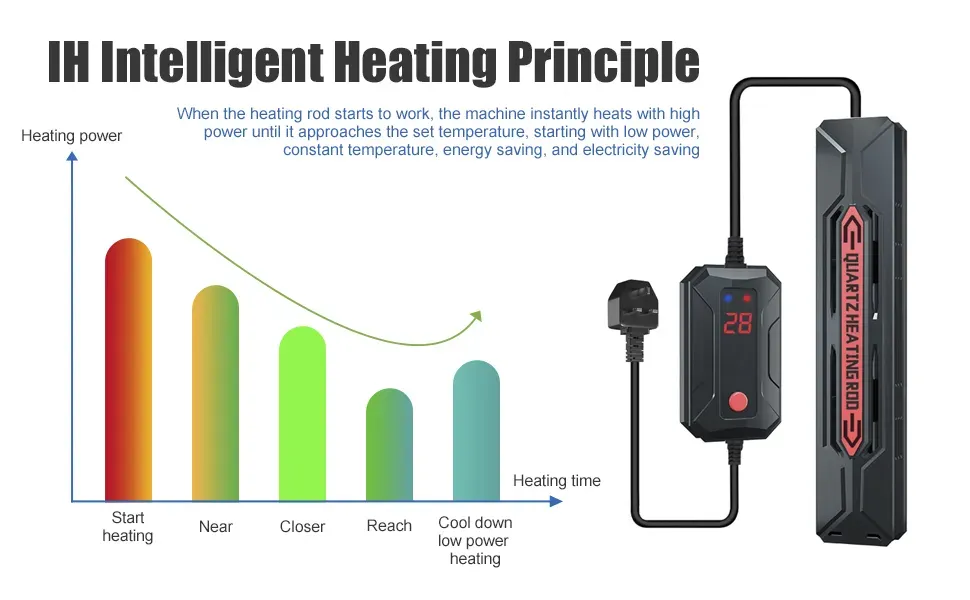
- Switch equipment back on and watch the next hour, not the next minute. A large water body recovers slowly, and chasing the display up with a higher set point causes overshoot. Keep the quartz rod fully submerged and the set button on the cable dry. Wait 10–30 minutes for the reading around the rod to settle, and do not chase a higher set point. If the display disagrees with your reference thermometer, trust the thermometer for the refill.
UK Tap Water: What to Know Before You Pour
British tap water varies significantly by region. Southern England and the Midlands often have hard, alkaline water (high KH and GH), while Scotland and parts of Wales tend toward softer water. Most community tropical fish tolerate UK tap water once dechlorinated, but always check your local supplier's annual water quality report.
Key points for UK aquarists:
- Always use a dechlorinator that neutralises both chlorine and chloramine (most UK water companies use chloramine).
- If your water is very hard, consider mixing with RO water for soft-water species — but for typical community fish like those in our 60L tropical stocking guide, conditioned tap water works well.
- Never use water from a water softener — the sodium content harms fish and invertebrates.
Common Water Change Mistakes UK Beginners Make
Based on patterns seen across UK fishkeeping communities, these errors cause the most problems:
- Changing too much too rarely: A 70% change monthly shocks fish more than 25% weekly.
- Temperature mismatch: Cold tap water in winter causes white spot outbreaks in tropical species — the classic post-change relapse in discus tanks.
- Trusting one uncalibrated display: If the heater's read-out has drifted from your reference thermometer, every "matched" refill is quietly wrong. Cross-check monthly with a reference thermometer rather than guessing.
- Skipping dechlorinator: Even brief chlorine exposure damages gill tissue.
- Cleaning all filter media in tap water: This crashes the biological filter and causes ammonia spikes.
- Changing water before the tank is cycled: Always complete your fishless cycle first.
How Water Changes Affect Your Running Costs
Water itself is cheap in the UK — a 25% change on a 100-litre tank uses about 25 litres, costing roughly 8–12p depending on your water company. The bigger cost consideration is heating replacement water to match tank temperature. If you are budgeting for a new setup, our guide to how much electricity a fish tank heater uses in the UK breaks down the kWh maths in detail.
Frequently Asked Questions
How much water should I change each week?
For most UK community tanks, change 25–30% weekly. Increase to 30–40% if nitrate readings exceed 30 ppm or your tank is heavily stocked. Reduce slightly for densely planted, lightly stocked aquariums — but never stop testing.
Can I use tap water straight from the cold tap?
Only after adding dechlorinator. UK tap water contains chlorine or chloramine that kills fish. Always treat water before it enters the tank, and match temperature to within 1°C of the aquarium.
Should I do water changes during a fishless cycle?
During cycling, only change water if ammonia or nitrite exceeds 4 ppm — typically a 25–50% change with dechlorinated water. Once the cycle completes (ammonia and nitrite at 0 ppm), switch to regular weekly partial changes before adding fish.
Ready for stable temperatures after every water change? Browse the XINDI XD-L880 500W quartz heater — quartz tube, external single LED display, and free UK delivery from £54.02.
Ready to try AquariumPet?