Best Quiet Aquarium Filters UK: 7 Picks for Peaceful Living Rooms
Key Takeaways
- If your tank sits in a UK living room or open-plan kitchen, prioritise filters with vibration damping, adjustable flow and well-supported impellers — “quiet” is as much about setup as it is about the model.
- For most community tanks (40–125L), a quality internal filter with a spray bar is the simplest route to low noise and low fuss; for larger tanks (150L+), a well-installed external canister can be near-silent while offering higher capacity.
- Decibel claims vary by brand and test method. Use dB figures as a guide, but also consider real-world noise sources: air draw, cavitation, rattling media and cabinet resonance.
- Regular cleaning (without over-scrubbing beneficial bacteria) and replacing worn impeller parts is the fastest way to restore a “silent fish tank filter” performance.
Why a Quiet Filter Is Worth Choosing Deliberately
A humming filter can ruin an otherwise calming aquarium — especially in British open-plan homes where the lounge, dining area and kitchen blend into one. What starts as a gentle whirr at 6pm can become a constant distraction by 11pm, and if your tank is near a sofa or desk, the sound can feel louder than it measures.
This guide to the best quiet aquarium filters UK keepers actually shortlist gets straight to it: seven specific picks, the internal-versus-external trade-offs, and the maintenance habits that keep a filter quiet long after the honeymoon week. It is written for people who share their living space with their tank — and for larger systems where the filtration itself becomes serious kit.
If you’re still planning your full setup (tank size, stocking, cycling and equipment), start with our guide on how to start a home aquarium UK. Choosing a filter is much easier when you already know your target livestock and maintenance routine.
Why Filter Noise Matters in British Open-Plan Homes
In many UK homes, hard surfaces (wood/laminate floors, plaster walls, large windows) can reflect sound. A filter that’s “quiet” in a shop can become noticeably louder when it resonates through a cabinet or vibrates against glass at home. Noise also affects where you’re willing to place a tank — which can impact temperature stability, algae growth from direct sunlight, and even how often you enjoy it.
There’s also a wellbeing angle. The NHS notes that long-term exposure to noise can negatively affect health, including sleep and stress. While a fish tank filter won’t match industrial noise levels, the key point for aquarists is the persistence: a small, constant sound is harder to “switch off” mentally when you’re trying to relax or sleep. (Source: NHS guidance on noise and health: NHS Live Well – Hearing loss and noise.)
In practical terms, a quieter filter usually signals better engineering: balanced impellers, tighter tolerances, and more stable flow — which often translates to reliable filtration. That’s why “quiet” is not just comfort; it can be a proxy for quality.
Review: Top Rated Silent Internal Filters
Internal filters are popular in the UK because they’re compact, budget-friendly, and simple to service. They sit inside the tank, so there’s no siphon risk or hose routing through a cabinet — and fewer external components that can vibrate.
1) Fluval U-Series (U2/U3/U4) — dependable, low-vibration internal filtration
Fluval’s U-Series has long been a safe bet for UK living rooms: the casing is sturdy, the flow control is practical, and the multi-stage media setup helps reduce the “rattle” you can get when sponges collapse or media bags shift. In experience, most perceived noise comes from poor seating (filter not flush against the glass) or an air pocket after cleaning — both easy to fix.
- Best for: community tanks where you want stable filtration without fiddly setup.
- Why it’s quiet: solid housing + consistent impeller performance; adjustable outlets help you avoid water splash noise.
- UK tip: use the spray bar just below the waterline to reduce surface “waterfall” sounds while keeping agitation.
2) EHEIM pickup 200 (or 160) — simple design, good for bedrooms
EHEIM has a strong reputation in UK aquatics for longevity. The pickup series is a straightforward internal filter that’s often chosen when the goal is “set and forget” quiet running. The top-removal cartridge design also means you can service the media without disturbing the whole unit — less chance of reintroducing vibration.
- Best for: smaller tanks and anyone prioritising the quietest power filter for bedroom style of operation.
- Why it’s quiet: stable impeller and minimal moving parts; easy to keep clean.
- Watch-outs: keep the intake clear; blockage can increase motor strain and noise.
3) Aquael ASAP / FAN series — strong value for quiet day-to-day running
Aquael internal filters are common in UK retailers and often impress on noise-to-price ratio. When correctly positioned, they can run with little more than a soft hum. They’re also easy to fine-tune for flow, which matters if you keep slow swimmers or want a calmer surface in a living room display.
- Best for: budget builds that still need low noise and decent performance.
- Why it’s quiet: balanced, straightforward impeller design; foam media dampens vibration.
- Pro tip: replace sponges before they deform — worn sponges can shift and transmit vibration.
Internal vs external filters UK: when internal makes more sense
Choose an internal filter when you want minimal installation variables (hoses, valves, cabinet acoustics) and you’re happy with equipment being visible in the aquarium. Internal units also reduce the risk of “micro-leaks” around hose connections — a common anxiety for renters or anyone with carpets.
Review: Best External Canister Filters for Large Tanks
For bigger tanks, external canister filters are often the quietest option when installed correctly. The motor unit sits outside the tank, and the large body allows more media and smoother flow. The trade-off is setup complexity: hose routing, priming, and cabinet resonance all affect perceived noise. (On very large or marine systems, the same logic eventually leads keepers to a sump — filtration and return pump moved into the cabinet entirely, where flow noise over baffles, not motor hum, becomes the thing you tune.)
4) Fluval 07 Series (207/307/407) — strong all-rounder with quiet engineering
The Fluval 07 series is widely stocked in the UK and is frequently shortlisted for “silent fish tank filter reviews UK” searches because it combines high capacity with a refined motor head. In practice, cabinet installation matters: a soft mat under the canister can reduce vibration transfer dramatically.
- Best for: 90–300L tanks needing quiet, powerful filtration.
- Why it’s quiet: improved priming and motor design; steady flow reduces turbulence.
- Setup tip: ensure hoses have gentle curves — tight bends can create restriction and noise.
5) EHEIM Classic (2213/2215/2217) — “old school”, but famously hushed and reliable
EHEIM Classic canisters are known for reliability and low noise, especially once they’re properly primed and free of trapped air. They don’t always have the modern quick-release conveniences, but many experienced UK aquarists stick with them because they just keep going.
- Best for: aquarists who value longevity and quiet stability over flashy features.
- Why it’s quiet: proven motor design; minimal rattly plastic parts.
- Maintenance note: periodic impeller well cleaning prevents grinding noises.
6) OASE BioMaster Thermo — premium quiet with integrated pre-filter (and heater option)
OASE BioMaster filters are a premium choice in the UK, especially if you want easy maintenance without repeatedly opening the main canister. The pre-filter design is genuinely useful for keeping flow consistent — and consistent flow is a big factor in keeping canisters quiet over time.
- Best for: larger tropical tanks where you want quiet operation and cleaner servicing.
- Why it’s quiet: stable flow + pre-filter reduces clogging-related strain.
- UK context: the Thermo versions can reduce in-tank clutter by moving heating out of view.
7) JBL CristalProfi e-series — strong media volume, good for smooth, quiet flow
JBL canisters are a common alternative to Fluval/EHEIM in the UK. Their strength is typically media capacity and flow performance, which helps avoid the “surging” that can create vibration. As with all canisters, de-aeration after maintenance is key: trapped air is the number one cause of sudden rattling.
- Best for: medium-to-large tanks needing high biological filtration and calm running.
- Why it’s quiet: smooth flow path and strong sealing; good once purged of air.
- Install tip: keep the canister level and secure to avoid cabinet buzz.
Noise Comparison: Decibel Ratings of Popular UK Brands
Decibel (dB) ratings can help you shortlist, but treat them cautiously: brands may measure at different distances and under different conditions. Also, our ears perceive changes non-linearly — a 10 dB increase is often described as roughly “twice as loud”. (Source: Engineering Toolbox explanation of the decibel scale: Engineering ToolBox – Decibel.)
Use this table as a directional guide and prioritise real-world quieting factors: trapped air, vibration transfer, and water return noise.
- Internal filters (typical real-world range): ~20–35 dB at close range, depending on flow and mounting.
- External canisters (typical real-world range): ~18–30 dB, but can spike if air is trapped or hoses resonate.
- Hang-on-back / “power filters” (typical): often quiet motor-wise, but return “waterfall” noise can dominate if the water level drops.
If you’re specifically searching for the best quiet aquarium filters UK options for a lounge, remember that the loudest sound may not be the motor at all — it might be water splashing from an outlet that’s set too high.
Maintenance Tips to Keep Your Filter Quiet
Even the best filter will get noisier if it’s partially blocked, full of air, or running with worn parts. These actions reliably reduce noise without compromising filtration.
-
Keep the water level stable (especially for power/HOB filters).
Top up for evaporation so the return doesn’t splash. If you live in a hard-water area, consider limescale build-up on outlets and remove it gently.
-
De-aerate after cleaning (canisters and internals).
Trapped air causes rattling and “chatter”. Tilt internals briefly underwater; for canisters, follow the priming procedure and gently rock the unit to release bubbles.
-
Clean the impeller and impeller well.
Most “suddenly noisy” filters have debris around the impeller. Use a small brush and tank water (not hot tap water) to avoid damaging parts and to protect beneficial bacteria elsewhere in the filter.
-
Replace worn rubber bushings/seals.
Perished rubber can increase vibration and cause leaks. Stick to manufacturer parts for safety and fit.
-
Stop cabinet resonance.
Place external filters on a dense foam/rubber mat and ensure hoses aren’t touching cabinet walls where they can transmit vibration.
-
Don’t over-pack media baskets.
Crushed sponges and tightly stuffed bags can restrict flow, making the motor work harder and noisier.
If you’re still early in the hobby, filter quietness goes hand-in-hand with good cycling and stocking decisions. Our guides on cycling and first fish choices will help you avoid the common “over-filter/under-maintain” trap: fishless cycle: a step-by-step UK aquarium guide and best tropical fish for a 60L tank UK.
Where to Buy Replacement Filter Media in the UK
Quiet performance depends on using the right media and replacing consumables on schedule. In the UK, stick to reputable retailers (clear returns policy, genuine parts, proper labelling). Many brands also specify approved media types for flow and safety.
- Genuine sponges and cartridges: best fit, predictable flow, fewer rattles from poor seating.
- Ceramic biological media: tends to last longer; rinse gently in dechlorinated/tank water to preserve bacteria.
- Activated carbon (when needed): useful for removing medication/odours, but not essential as a permanent stage for most tanks.
UK compliance note: if you’re disposing of old media or packaging, follow local council recycling rules. Also, if you’re running medications, always read manufacturer instructions and store treatments responsibly out of reach of children and pets.
For a broader view of must-have equipment (heater, lighting, test kits, substrate and filter sizing), refer back to our guide on how to start a home aquarium UK.
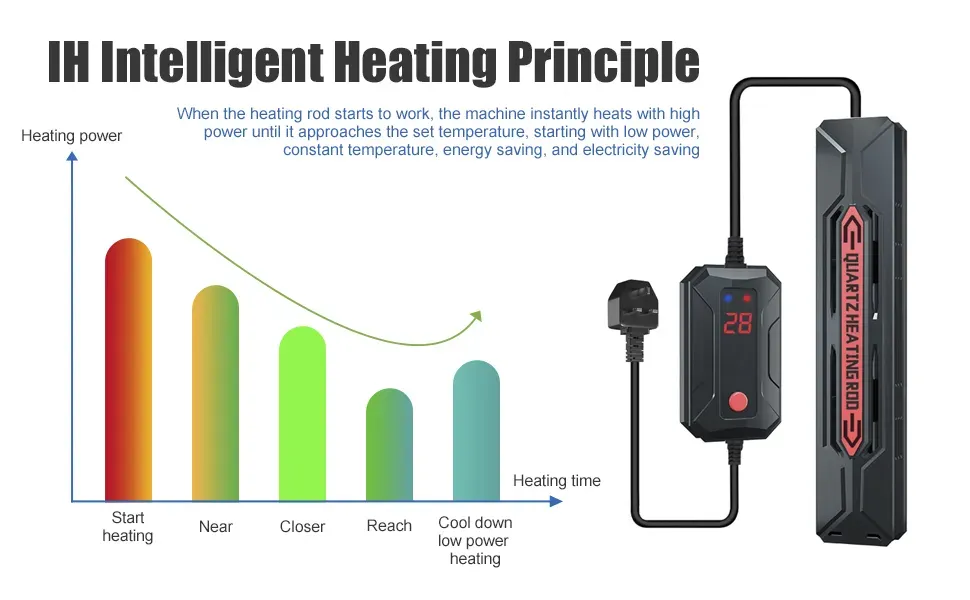
Pair your quiet filter with a precision heater for stable temperatures year-round. Our XINDI XD-L880 500W Quartz Aquarium Heater (£54.02, free UK delivery) is a natural fit for the same cabinet: the quartz rod in its protective shell can sit in a marine sump return chamber, dry-run protection covers the water-change moments every sump owner dreads, and the external controller moves one more piece of kit out of the display tank.
Ready to Upgrade to a Quieter Filter?
If your current setup is buzzing, splashing or rattling, upgrading to a better-matched filter (or simply the right size) is usually the quickest win for a calmer living room. Explore AquariumPet’s filter range and choose by tank size and filter type.
Before you buy, it’s worth factoring in running costs (media, electricity, replacements). This UK-specific breakdown helps you plan: how much electricity does a fish tank heater use UK.
Frequently Asked Questions
What is the best quiet aquarium filter in the UK for a living room?
For most UK living rooms, a quality internal filter (e.g., Fluval U-Series or EHEIM pickup) is the easiest route to low noise because there are fewer installation variables. For 150L+ tanks, a well-installed external canister (Fluval 07, EHEIM Classic, OASE BioMaster) can be even quieter while offering more media capacity.
Are external filters always quieter than internal filters?
Not always. External canisters can be near-silent, but only if they’re properly primed, free of trapped air, and isolated from cabinet vibration. Internal filters can be extremely quiet too, particularly when the outlet is set to avoid splashing and the unit is firmly seated on the glass.
Why is my “silent” filter suddenly rattling after I cleaned it?
The most common causes are trapped air around the impeller, debris in the impeller well, or media not seated correctly. Turn the unit off, re-seat the media, gently purge air (tilting an internal underwater or rocking a canister after priming), and clean the impeller assembly with a soft brush.
What’s the quietest power filter for a bedroom?
For bedroom use, avoid loud return splashes: keep the water level high and consider a spray bar or submerged outlet. If you specifically mean hang-on-back “power filters”, choose models with adjustable flow and a smooth return lip; however, many UK aquarists find a well-sized internal filter (like the EHEIM pickup range) easier to keep consistently quiet overnight.
Ready to try AquariumPet?