Best Coldwater Fish for Small Tanks UK: 5 Easy Species
With UK energy prices remaining a significant concern for households, the popularity of unheated, indoor aquariums has skyrocketed. If you are looking to bring the serenity of an aquatic ecosystem into your living room without the added expense of running an aquarium heater, you are not alone. In fact, according to the Ornamental Aquatic Trade Association (OATA), over 4 million UK households enjoy keeping pet fish, and coldwater setups are rapidly becoming the go-to choice for the modern, energy-conscious aquarist.
However, finding the best coldwater fish for small tanks UK requires careful consideration. The classic image of a goldfish in a small glass bowl is not only outdated but fundamentally contrary to modern UK animal welfare standards. If you have a nano aquarium or a compact tank under 60 litres, you need fish species that are genuinely suited to smaller footprints while thriving in typical British room temperatures.
Key Takeaways
- Room Temperature is Perfect: Modern UK homes with central heating (typically 18–21°C) provide the ideal ambient temperature for many "coldwater" and temperate fish species.
- Size Matters: Goldfish are completely unsuitable for small tanks. Instead, opt for nano species like White Cloud Mountain Minnows or Japanese Rice Fish.
- Filtration is Non-Negotiable: Unheated does not mean unfiltered. Coldwater fish still require a fully cycled, filtered environment.
- Hard Water Heroes: Many of the best coldwater fish naturally thrive in the hard, alkaline tap water common in Southern England and the Midlands.
Why Choose Coldwater Fish for Your UK Home?
The term "coldwater" is slightly misleading in the indoor aquarium hobby. A more accurate term is "temperate". Because the average UK home is insulated and centrally heated, an indoor tank rarely drops below 15°C, even in the depths of winter. This ambient temperature is the sweet spot for a fascinating variety of active, colourful fish.
Opting for an unheated setup significantly reduces your electricity consumption. If you are curious about the exact savings, we highly recommend our detailed breakdown of how much electricity a fish tank heater uses in the UK. By eliminating the 50W to 100W heater typically required for tropical setups, you create a beautiful, low-maintenance, and budget-friendly focal point for your home.
An unheated indoor aquarium in a standard UK home provides a remarkably stable environment for temperate fish — central heating keeps the room, and therefore the water, inside a narrow band all winter.
Top 5 Species for Nano and Small Tanks (30L to 60L)
When selecting livestock for compact aquariums, you must account for the adult size of the fish, their activity levels, and their bioload (how much waste they produce). Here are the top five species that thrive in unheated UK indoor tanks.
1. White Cloud Mountain Minnows (Tanichthys albonubes)
The undisputed champion of the small unheated aquarium. Originally from the mountain streams of China, these hardy, peaceful shoaling fish flash beautiful red and silver colours as they dart around the tank — and they actively prefer the cool 14–22°C water a UK room provides.
- Minimum Tank Size: 40 Litres (ideally a 60cm-long footprint)
- Temperature Range: 14°C – 22°C
- Water Parameters: Adaptable, but prefers a pH of 6.0–8.0. Excellent for standard UK tap water.
- Behaviour: Peaceful shoaling fish. Keep a group of at least 6 — 8 to 10 is better.
2. Japanese Rice Fish / Medaka (Oryzias latipes)
Medaka have taken the UK aquascaping scene by storm. They are incredibly tolerant of temperature swings and come in stunning varieties, including Platinum and Youkihi (orange). Because they spend a lot of time near the water's surface, they are visually striking in shallow, rimless tanks.
- Minimum Tank Size: 30 Litres
- Temperature Range: 10°C – 24°C
- Water Parameters: pH 7.0–8.0. Thrives in hard water.
- Behaviour: Top-dwelling, peaceful, and highly active.
3. Zebra Danios (Danio rerio)
Zebra Danios are incredibly hardy and boast striking horizontal stripes. While they are small, they are extremely energetic swimmers. Therefore, while they can survive in a 30L tank, they truly need the swimming length of a 50L to 60L aquarium (at least 60cm long) to display their natural behaviours.
- Minimum Tank Size: 50 Litres (Long)
- Temperature Range: 18°C – 24°C
- Water Parameters: pH 6.5–7.5.
- Behaviour: Fast-moving, sometimes boisterous. Best kept in groups of 6 or more.
4. Variatus Platy (Xiphophorus variatus)
Often mistakenly sold strictly as tropical fish, the Variatus Platy actually prefers cooler water than its cousin, the standard Maculatus Platy. They bring a burst of tropical-looking colour—yellows, reds, and blacks—to an unheated tank. They are also excellent algae grazers.
- Minimum Tank Size: 60 Litres
- Temperature Range: 15°C – 24°C
- Water Parameters: pH 7.0–8.2. Perfect for hard water areas like London and the South East.
- Behaviour: Livebearers; they will breed readily. Keep a ratio of one male to two females to prevent harassment.
5. Rosy Red Minnows (Pimephales promelas)
Though often sold as feeder fish in the US, in the UK they are appreciated as hardy, entertaining pets. They have a lovely peach-pink colouration and exhibit fascinating social behaviours, with males claiming and defending small caves during breeding season.
- Minimum Tank Size: 50 Litres
- Temperature Range: 10°C – 21°C
- Water Parameters: pH 7.0–8.0.
- Behaviour: Bottom to mid-dwelling, peaceful but active.
Care Requirements for White Cloud Mountain Minnows UK
Because they are the ultimate choice for UK beginners, understanding white cloud mountain minnows uk care is essential. Despite their hardy nature, they still require pristine water conditions.
To keep your minnows thriving, ensure your tank is fully cycled before adding them. They are micro-predators in the wild, so while they will readily accept high-quality crushed flake food, their colours will truly pop if you supplement their diet with live or frozen foods like Daphnia and Bloodworm—both readily available in UK aquatic stores.
Furthermore, these fish appreciate a well-planted tank with gentle water flow. Adding aquatic botanicals, like Indian Almond leaves, can help mimic their natural stream habitats, providing both cover and beneficial tannins.
The Truth About Goldfish and Tank Size
It is impossible to write a guide on coldwater fish without addressing the elephant in the room: goldfish. A common search query we receive is regarding fancy goldfish care uk for small tanks. We must be absolutely clear: there is no such thing as a goldfish suitable for a 30L or 60L tank.
Under the UK Animal Welfare Act 2006, pet owners have a legal duty to meet the behavioural and environmental needs of their animals. The RSPCA and leading aquatic veterinarians strongly advise against keeping goldfish in bowls or small nano tanks. Here is why:
- Massive Growth: Even fancy goldfish (like Orandas and Ryukins) grow to the size of a grapefruit and can live for 15+ years.
- High Bioload: Goldfish produce an enormous amount of ammonia. In a small tank, this waste builds up rapidly, leading to ammonia poisoning, stunted growth, and premature death.
- Minimum Requirements: Proper fancy goldfish care requires a minimum of 100 to 120 litres for the first fish, and an additional 40 litres for each subsequent fish, paired with heavy-duty filtration.
If you have a small tank, do not buy a goldfish. Stick to the brilliant micro-species listed above.
Setting Up a Coldwater Tank Without a Heater
Setting up an unheated tank follows the same fundamental rules as a tropical setup, minus the heater. If you are starting from scratch, we highly recommend our guide on how to start a home aquarium UK, which covers the entire process from planning to maintenance.
1. Placement and Temperature Stability
Keep your aquarium away from direct sunlight, radiators, and draughty windows. While temperate fish like cooler water, rapid temperature swings caused by a radiator switching on and off can compromise their immune systems.
2. Filtration is Vital
Coldwater fish need highly oxygenated, clean water. A good filter will process fish waste and keep the water clear. Because small tanks are often placed in bedrooms or living areas, noise can be an issue. Browse our top picks for the best quiet aquarium filters UK to find a silent, efficient option.
3. The Nitrogen Cycle
Never add fish to tap water on day one. You must build up beneficial bacteria in your filter to process toxic fish waste. Learn exactly how to do this safely by following our step-by-step fishless cycle guide.
Best Coldwater Plants for UK Aquariums
Live plants absorb nitrates, provide hiding spaces, and make your tank look incredible. Fortunately, you don't need a heated tank to grow a beautiful underwater garden. The best plants for unheated indoor tanks include:
- Java Fern (Microsorum pteropus): Nearly indestructible. Do not bury the roots in the gravel; tie or glue it to a rock or piece of wood.
- Anubias: A slow-growing, broad-leaved plant that thrives in cooler water and low light.
- Hornwort (Ceratophyllum demersum): A fast-growing floating or planted stem plant that is excellent at sucking up excess nutrients and preventing algae.
- Marimo Moss Balls: Extremely popular in the UK, these quirky algae balls are incredibly easy to care for and look great in nano tanks.
Ready to Start Your Coldwater Aquarium Journey?
An unheated small tank is one of the cheapest ways into UK fishkeeping — and the planning steps are the same as any other setup: cycle first, stock sensibly, test the water.
Start with our guide on how to start a home aquarium UK; if your plans run bigger than 60 litres (or a koi holding vat is on the cards), see the XINDI XD-L880 500W quartz heater, listed for tanks up to 300 L.
Bringing Pond Fish Indoors for Winter? A Small Tank Is Not a Holding Vat
A quick word for pond keepers, because this page attracts plenty of them each autumn: the five species above suit small unheated display tanks, but overwintering juvenile koi or a poorly pond fish indoors is a different job entirely. Young koi grow fast and foul water faster — a realistic indoor holding vat starts around 500 litres. Keepers who simply want adult fish to rest hold vats cool (semi-dormant territory, roughly 10–15°C, often with no heat at all indoors); keepers growing on juveniles or nursing a sick fish instead hold a steady 18–21°C so the fish keep feeding through winter.
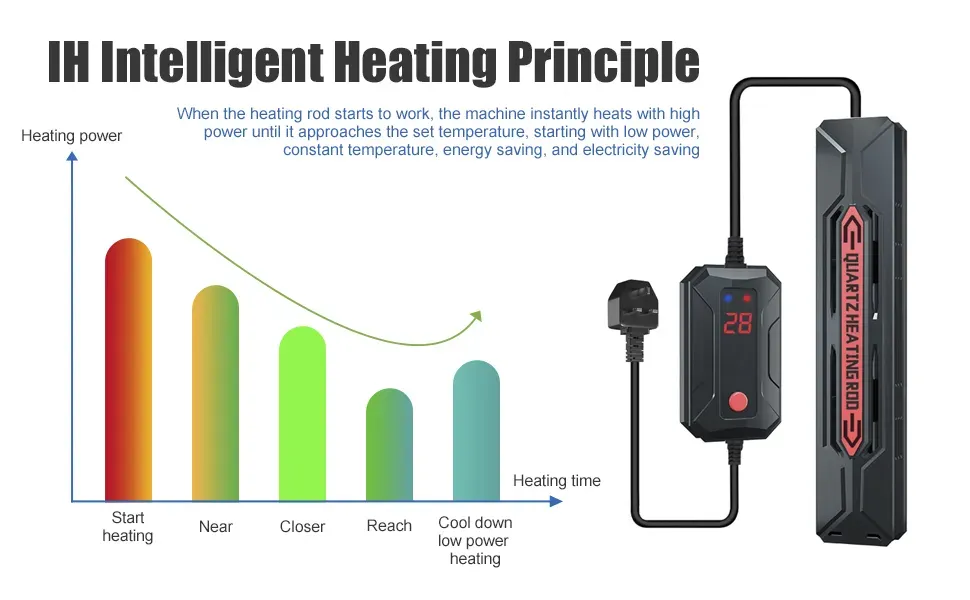
It is that second, grow-on camp where controlled heating earns its keep: an unheated vat in a shed or garage can crash towards freezing in a hard frost, exactly what you brought the fish inside to avoid. A thermostatic system with dry-run protection — our XINDI XD-L880 500W Quartz Aquarium Heater sets 20–34 °C on tanks up to 300 L, with a quartz rod in a protective shell — paired with correct wattage for the volume (see our aquarium heater UK wattage guide) holds a grow-on vat steady through winter. For a lounge nano tank, though, skip the heater and enjoy the species above the way they like it: cool.
Frequently Asked Questions
Do coldwater fish need a filter?
Absolutely. The term "coldwater" refers only to the temperature of the water, not the care requirements. All fish produce ammonia, which is highly toxic. A filter houses the beneficial bacteria required to convert this ammonia into safer nitrates. Without a filter, your fish will suffer from ammonia poisoning.
Can I keep a goldfish in a 30L tank?
No. Goldfish grow very large (up to 30cm depending on the breed) and produce a massive amount of waste. A 30L tank is far too small and will lead to stunted growth and premature death. At 30 litres, look at Medaka or a shrimp colony instead — even White Cloud Mountain Minnows do best from about 40 litres up.
What is the easiest coldwater fish for a beginner?
The White Cloud Mountain Minnow is widely considered the best and easiest coldwater fish for beginners in the UK. They are incredibly hardy, tolerate a wide range of water parameters, and are peaceful, making them ideal for small, unheated indoor tanks.
Can I mix tropical and coldwater fish?
Generally, no. Forcing tropical fish into unheated water will weaken their immune systems and cause illness. Conversely, keeping coldwater fish in heated tropical tanks speeds up their metabolism unnaturally, shortening their lifespan. Always match fish with similar temperature and water parameter requirements. If you decide you'd rather run a heated setup, check out our guide on the best tropical fish for a 60L tank UK.
Ready to try AquariumPet?